


Root canal treatment is a highly successful procedure in saving a damaged tooth. However, in rare cases, additional procedures such as an apicoectomy may be necessary. This type of endodontic surgery in Layton and Pleasant View is designed to address persistent dental issues, providing a reliable solution for your dental health.
What is an Apicoectomy?
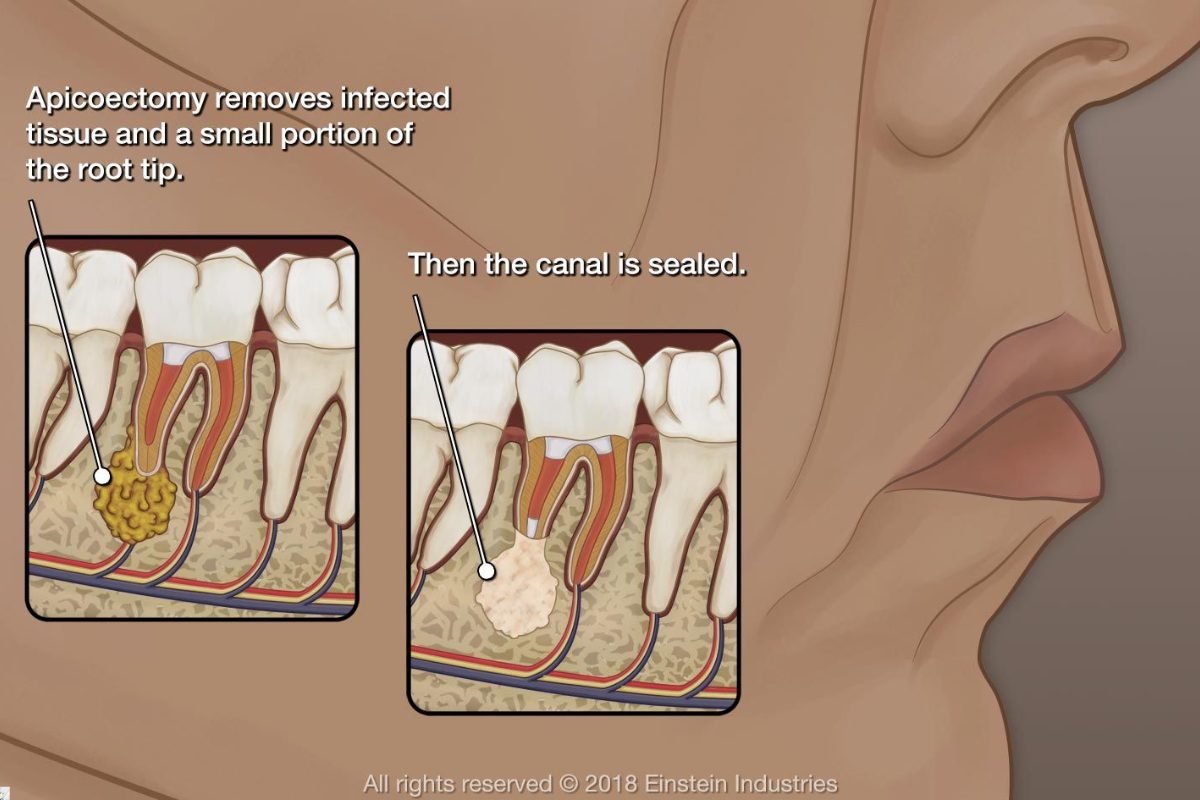
An apicoectomy is a surgical procedure to remove the infected or inflamed tip of a tooth’s root. It is often performed when a root canal treatment fails to resolve the problem or when there is an infection at the root tip.
Reasons for an Apicoectomy
Several factors may necessitate an apicoectomy:
- Persistent infection: Despite a root canal, the infection may persist or recur.
- Fractured root: A cracked or broken root can hinder the success of a root canal.
- Cyst or granuloma: These growths at the root tip can cause pain and discomfort.
- Cavity formation: A cavity that extends beyond the root canal can require an apicoectomy.
The Apicoectomy Procedure
An apicoectomy is typically performed under local anesthesia. Here’s a general overview of the procedure:
- Incision: A small incision is made in the gum tissue to access the affected tooth.
- Bone removal: A portion of the bone covering the root tip is removed to expose the area.
- Root end resection: The infected or damaged portion of the root is removed.
- Filling: The root canal is filled with a particular material to seal it.
- Bone graft (optional): A bone graft may sometimes be used to promote healing.
- Closure: The gum tissue is stitched closed.
Risks Associated with Apicoectomy
Like any surgical procedure, apicoectomy carries certain risks. However, complications are rare when performed by experienced endodontists. Potential risks include:
- Infection: There’s a slight risk of infection at the surgical site.
- Swelling: Temporary swelling and discomfort are expected after the procedure.
- Damage to adjacent teeth: Near teeth may be accidentally damaged in rare cases.
- Failure of the procedure: While uncommon, the apicoectomy may not resolve the issue.
Choosing the Right Endodontist for Your Apicoectomy
When it comes to your apicoectomy, selecting a qualified endodontist is crucial. An experienced endodontist in Layton or Pleasant View, like those at Mountain View Endodontics, will have the expertise to perform the procedure efficiently and minimize risks, giving you peace of mind about your treatment.
Aftercare for Apicoectomy
Proper aftercare is essential for a successful recovery. Your endodontist will provide specific instructions, but general guidelines include:
- Medication: Take any prescribed pain relievers or antibiotics as directed.
- Ice packs: Apply ice packs to the affected area to reduce swelling.
- Oral hygiene: Maintain good oral hygiene, but avoid brushing or flossing directly on the surgical site.
- Avoid strenuous activity: Restrict physical exertion for a few days.
- Follow-up appointments: Attend scheduled follow-up visits to monitor healing.
An apicoectomy may be the solution if you’re experiencing persistent dental pain or discomfort after a root canal. Consulting with an endodontist in Layton or Pleasant View can help determine the best course of treatment for your specific situation.