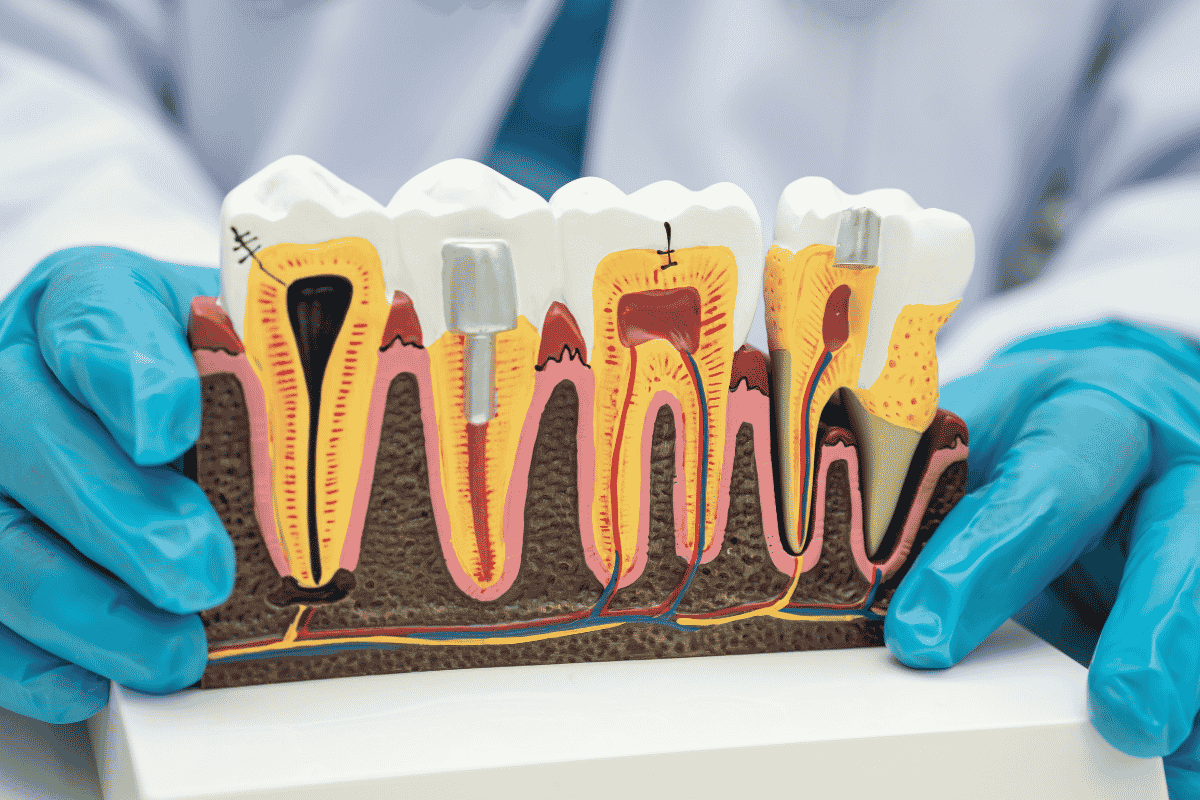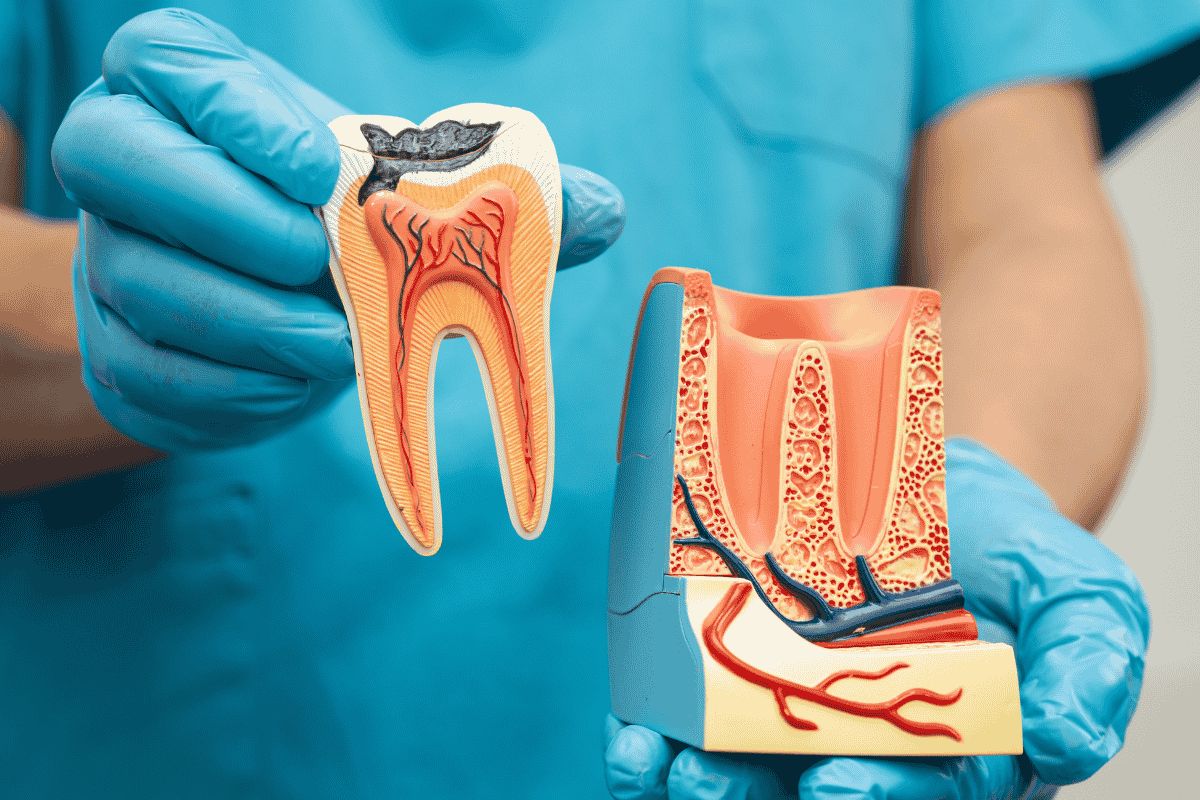



While you might not be able to identify the exact need for a root canal visually, certain signs can indicate potential problems. These include severe toothache, sensitivity to hot or cold temperatures, swelling or tenderness in the gums, a dark spot on the tooth, or a persistent bad taste in your mouth. If you experience any of these symptoms, it’s crucial to consult an endodontist for proper diagnosis and treatment.
What Is Root Canal Therapy?
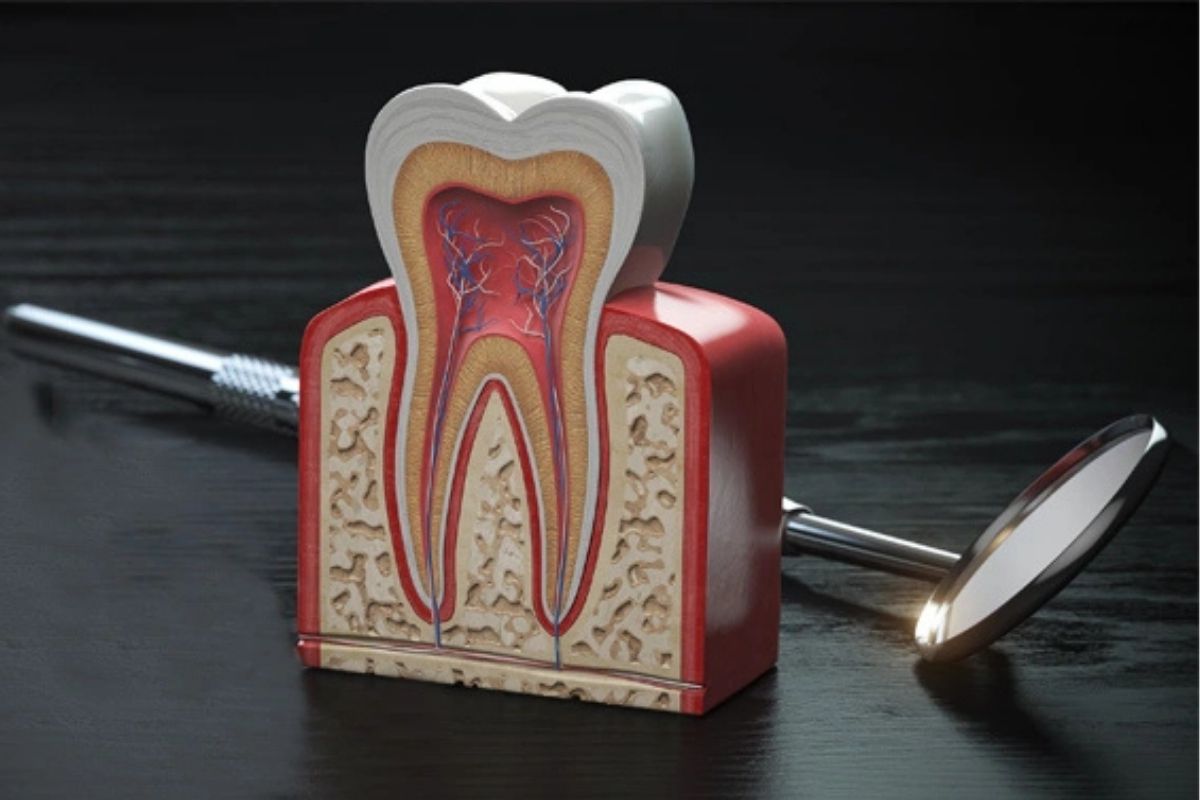
Root canal treatment is a standard dental procedure to save a severely decayed or damaged tooth. The therapy involves removing infected or inflamed tissue, known as the pulp, within the tooth. By cleaning and sealing the inner chamber of the tooth, this procedure eliminates the source of pain and prevents further damage.
Dental practitioners often recommend it to avoid tooth extraction, preserving your natural smile and functionality. Thanks to advancements in endodontics, this treatment is now relatively comfortable and highly effective. It offers relief from pain while restoring the health of your tooth.
What Is Dental Pulp?
The dental pulp is the soft inner tissue of a tooth, containing nerves, blood vessels, and connective tissues. It resides in the central chamber and plays of the tooth a crucial role during tooth development. While the pulp is essential for a growing tooth, it becomes less critical once it matures.
Damage or infection in this tissue can lead to significant discomfort and may necessitate intervention to prevent complications. When the pulp becomes inflamed or infected, timely treatment can save the tooth and alleviate pain.
Signs That You May Require Root Canal Therapy
Some symptoms are clear indicators that a tooth may require immediate care. Below are the most common signs.
1. A Chipped or Cracked Tooth
A visible crack or chip can expose the pulp to bacteria, increasing the risk of infection. Left untreated, it may lead to sensitivity, pain, or discoloration.
2. Persistent Toothache
Continuous or intense tooth pain is a significant warning sign. The pain might radiate to your jaw or surrounding teeth, indicating internal damage.
3. Lingering Sensitivity
If you feel prolonged sensitivity to hot or cold foods, the nerves of your tooth may be inflamed. This type of discomfort is often a precursor to deeper issues.
4. Swelling
Swollen gums near the affected tooth could signal an underlying infection. The swelling may be accompanied by tenderness or redness, requiring immediate attention.
5. Bump on the Gum
A small, pimple-like bump on your gums near the tooth can indicate an abscess. This bump often releases pus, pointing to an advanced stage of infection. Recognizing these signs early can prevent the condition from worsening and save your natural tooth.
Can an X-ray Show Tooth Nerve Damage?
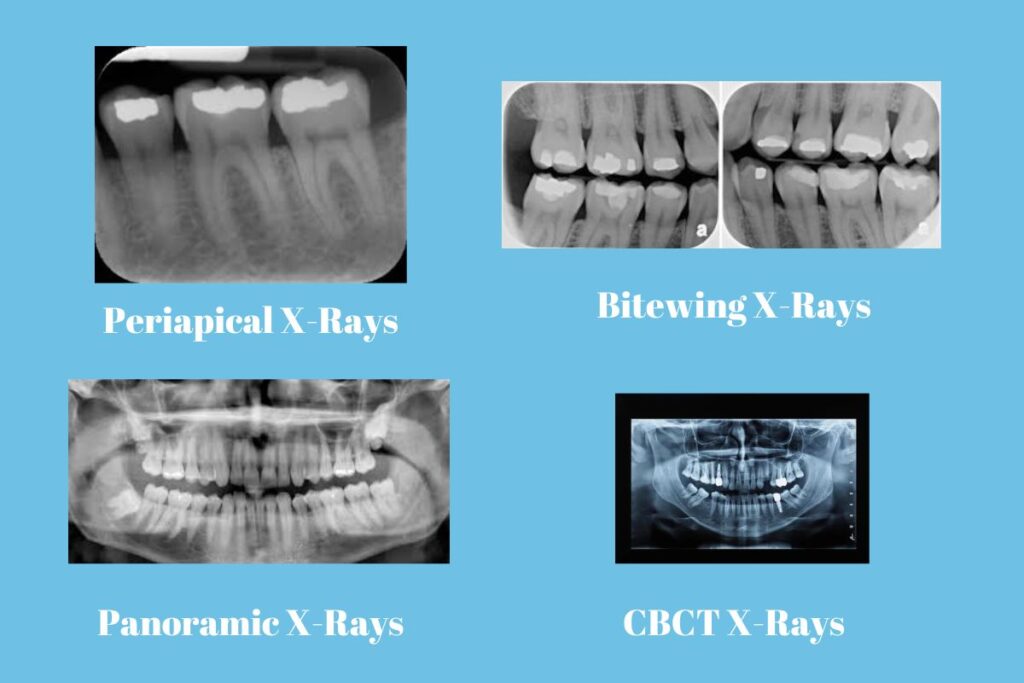
Root canal procedures often require specific types of X-rays to diagnose and treat the affected tooth accurately. Here are the primary types of X-rays used in root canal therapy:
- Periapical X-rays (PA): These X-rays provide a detailed view of the entire tooth, including the root and surrounding bone. They help endodontists identify the extent of infection, the location of the pulp, and any potential damage to the surrounding bone.
- Bitewing X-rays: While not as commonly used for root canals as PA X-rays, bitewing X-rays can help assess the overall oral health and identify any secondary issues that need to be addressed during the root canal procedure.
- Panoramic X-rays: This type of X-ray provides a comprehensive view of your entire mouth, including all your teeth, jaws, and surrounding structures. It can help assess oral health and identify potential issues affecting the root canal procedure.
- Cone Beam Computed Tomography (CBCT): This advanced imaging technique creates 3D images of your teeth, jawbone, and surrounding tissues. CBCT scans can benefit complex root canal cases, providing a more detailed view of the tooth’s anatomy and the surrounding bone structure.
By carefully analyzing these X-rays, an endodontist can plan and execute a successful root canal treatment, ensuring the long-term health of the affected tooth.
How Can I Reduce My Exposure to Radiation from X-rays?
While dental X-rays are essential for diagnosing and treating dental problems, minimizing your exposure to radiation is important. Here are some tips to reduce your exposure:
- Limit Unnecessary X-rays: Inform your endodontist about your dental history and any recent X-rays you’ve had. This can help your dentist determine if X-rays are essential.
- Choose a Reputable Dental Practice: Reputable dental practices use modern X-ray equipment with advanced technology to minimize radiation exposure.
- Wear a Lead Apron: A lead apron shields your body from radiation during X-ray procedures.
By following these tips and trusting your endodontist’s judgment, you can minimize your exposure to radiation while still receiving the necessary dental care.
Conclusion
While the need for a root canal may not be immediately visible, understanding the symptoms can help you act promptly. Toothaches, sensitivity, or visible signs like cracks and swelling are clear indications to consult your endodontist.
Early diagnosis can prevent complications and ensure the best outcome for your dental health. Don’t let dental discomfort linger.
Schedule a visit with Mountain View Endodontics in Layton, Pleasant View, and South Ogden to address these issues and restore your smile. Your healthy teeth are worth the effort!